
Alert no. 127 | 07 August 2026 | Version 1
Worker suffers cold burns while removing LPG from tank due to overfill
What happened?
- An investigation is underway into an incident in North Queensland where a worker suffered cold burns during an uncontrolled release of liquid LPG.
- While the worker was not severely injured, the incident had the potential to cause serious injuries or an ignition event affecting multiple people.
- Industry is reminded to ensure workers follow procedures, avoid distraction while conducting operations, and establish clear communication with other workers.
How did it happen?
- A fuel gas delivery network worker suffered minor cold burns to his upper torso and neck when liquid LPG was released from an unconnected transfer hose.
- During the filling of an LPG tank by a road tanker, the tanker driver became distracted by other unrelated operations around the transfer equipment.
- The tanker driver did not cease filling the small LPG tank. Upon return to the tank, it was identified that it had been overfilled to about 95% capacity.
- The tanker driver ceased filling, isolated the gas to the downstream gas system and enacted appropriate emergency response.
- As the road tanker did not have the ability to reclaim the gas from the tank, a compressor trailer was brought in to assist in extracting the overfilled LPG.
- During the setting up of the transfer equipment, and prior to the attachment of a hose, there was a miscommunication between the operators.
- This miscommunication resulted in the uncontrolled release of liquid LPG from the hose which the worker had in their hands. This caused the hose to be released from the worker’s grasp and move around uncontrolled while releasing liquid LPG.
- The tanker driver immediately shut the valves.
- The liquid LPG contacted the worker and he suffered minor cold burns to his upper body and neck.
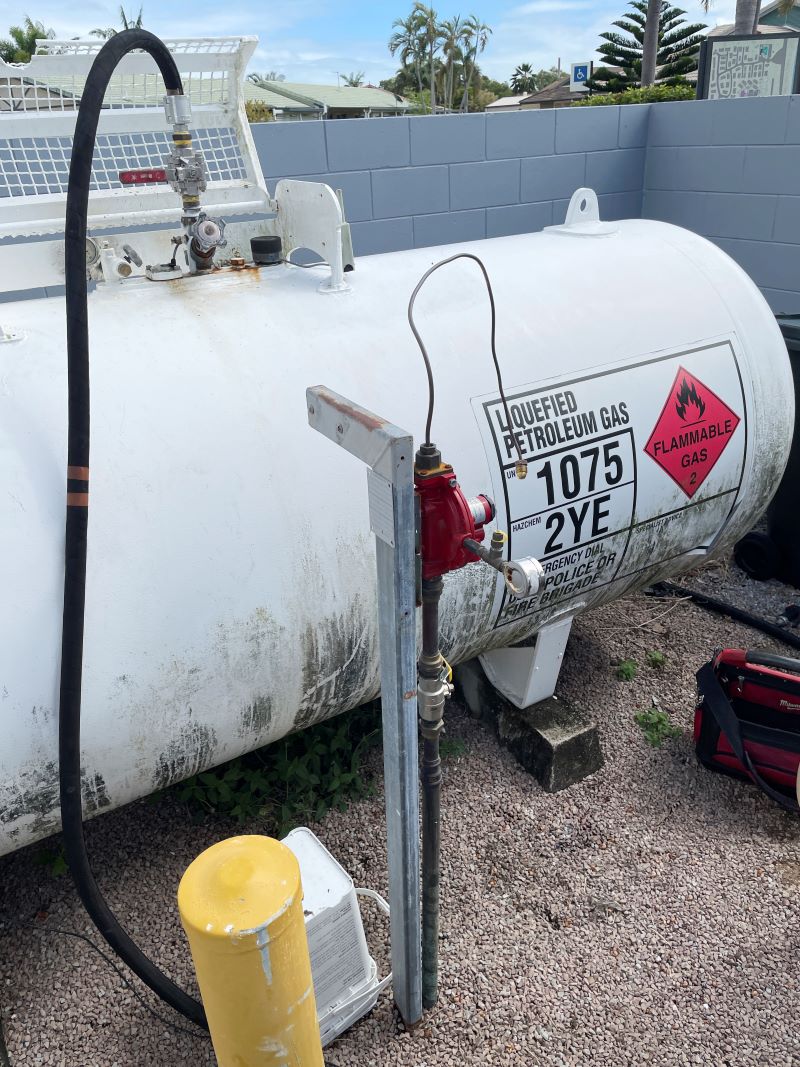
Image 1: Overfilled vessel
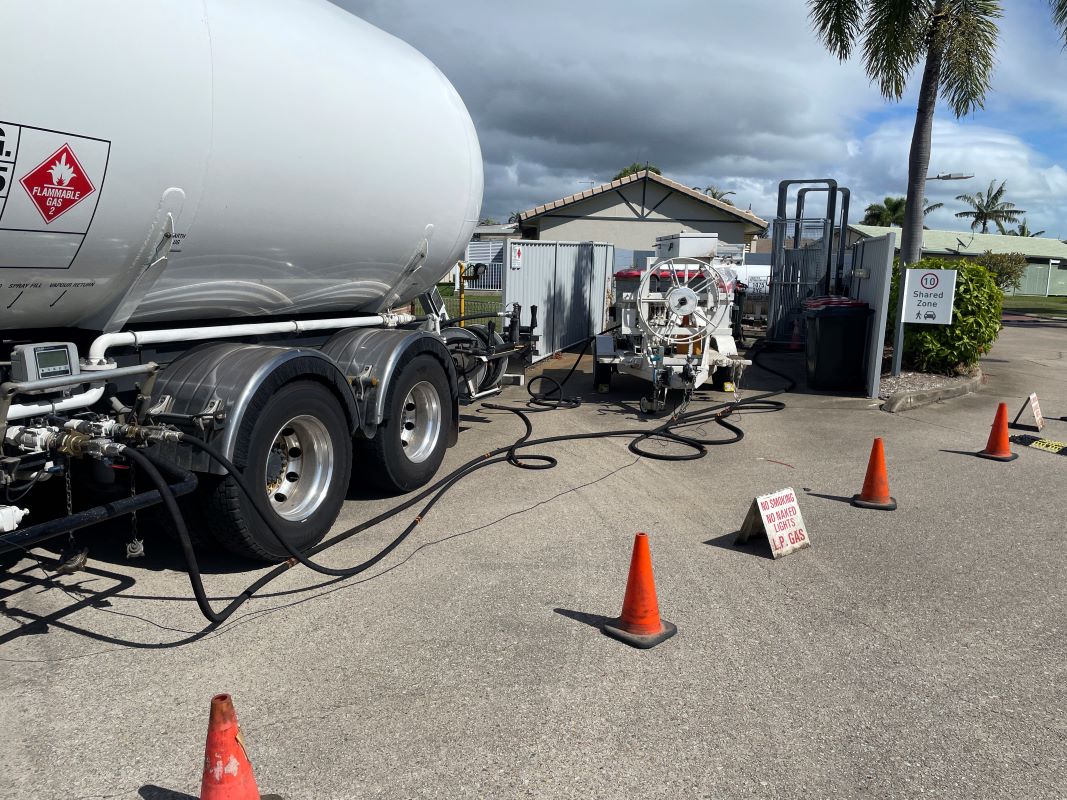
Image 2: Incident scene
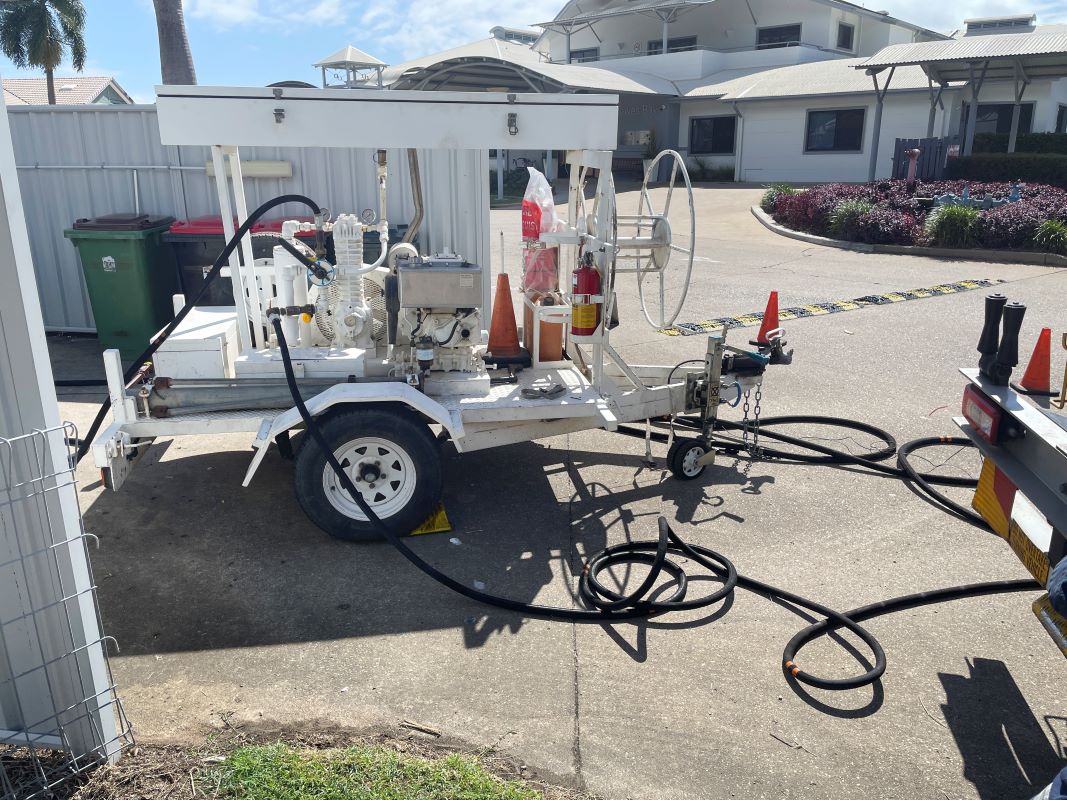
Image 3: Compressor trailer used for vessel-to-tanker transfer
Recommendations
- Although the injuries were minor, there was potential for severe injury. For example:
- the gas could have contacted eyes, potentially impacting vision, or the moving hose could have struck the workers
- had metallic components of the hose struck a reacting surface there was potential for ignition of the LPG.
- While the investigation is ongoing, preliminary lessons include:
- deviations from safety procedures and being distracted during the filling operations significantly increased the operational risk
- miscommunication between workers while conducting activities led to an unsafe event.
- It is recommended that operators:
- ensure that safety procedures provide details about supervision while conducting LPG transfer operations
- reaffirm to workers the need to follow safety procedures and about the outcomes that can occur when getting distracted and not focusing on the activities being conducted.
References and further information
- Petroleum and Gas (Production and Safety) Act 2004
- AS/NZS 1596 The storage and handling of LP Gas
Contact: GasSafe@rshq.qld.gov.au
Issued by Resources Safety & Health Queensland
Safety: This information is a guide only and is issued to promote safety through experience. It is not to be taken as a statement of law and must not be construed to waive or modify any legal obligation.
Placement: Place this announcement on noticeboards and ensure all relevant people in your organisation receive a copy.
Placement: Place this announcement on noticeboards and ensure all relevant people in your organisation receive a copy.
Find more safety notices
Search the hazards database