

Queensland Mines Inspectorate | Alert | No.465 V 1 | 27 November 2025
Workers exposed to serious risk from falling objects
Summary
- Resources Safety and Health Queensland (RSHQ) is concerned about the increasing number of incidents involving people who were in, or potentially exposed to, hazards in designated drop zones.
- Since July 2023, there have been more than 300 incidents reported (across coal, mineral mining and quarries and petroleum and gas) where people have or may have been exposed to falling plant, tools, or equipment.
- There is a high risk that workers could be seriously or fatally injured if they are impacted by objects falling within a drop zone. Further findings, advice and safety expectations are detailed below.
Issue explained
- We are seeing an upward trend in incidents involving drop zones in the state’s resources sector. In the second half of 2023 there were 61 incidents, in 2024 there were around 113 and so far in 2025 there have been 141.
- More specifically, coal and mineral mines and quarries have seen an increase in incidents involving falling objects in recent years, while petroleum and gas have seen a slight downward trend.
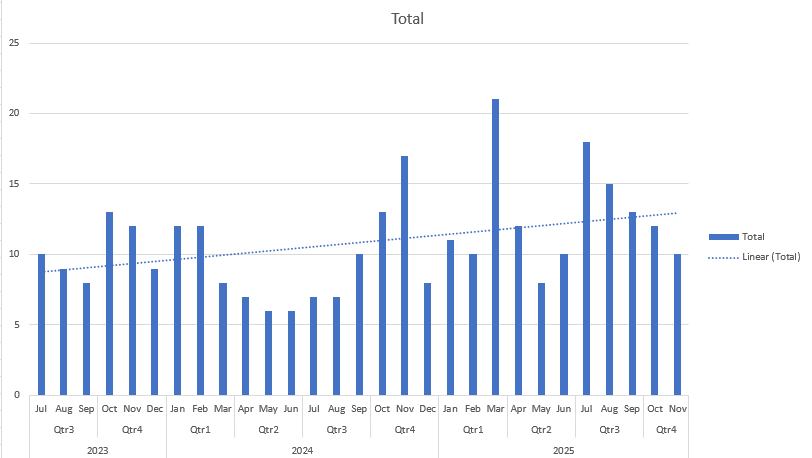 Figure 1: Trend line indicates increase across all subsectors of the resources industry.
- The analysis of reported incidents revealed several recurring instances of ineffective hazard identification and inadequate controls to manage risk, causing safety and operational deficiencies across worksites.
- A sample of reported incidents (including descriptions and photographs) is included below.
- Themes include:
- Exclusion zones: Exclusion zones were either poorly defined or not enforced, and hand tools were not consistently tethered, increasing the risk of dropped objects.
- Worker behaviour and compliance: Instances of complacency were noted, particularly among workers performing routine high-risk tasks. Non-compliance with established site procedures was also identified.
- Lifting operations: Equipment was frequently overloaded, and lift plans were either undeveloped or not effectively executed.
- Change management: Formal change management processes were not implemented, leading to uncontrolled modifications and procedural gaps.
- Maintenance and equipment integrity: Aging plant and equipment suffered from ineffective maintenance strategies. In some cases, equipment had been modified beyond original manufacturer specifications, compromising safety.
- Material handling: Overflow at transfer points resulted in uncontrolled material spillage, posing additional hazards.
Learnings
- The following learnings have been identified to enhance site safety and reduce the risk of harm from falling objects:
- Risk identification and assessment: Comprehensive risk assessments must be conducted to identify areas where falling plant or equipment could pose a foreseeable hazard to personnel.
- Drop zone management: The site’s safety system must be used to guide the identification and clear delineation of drop zones. Supervisors and workers must actively implement effective controls including the maintenance of exclusion zones in alignment with assessed fall risks.
- Supervisory oversight and compliance: Supervisors are responsible for ensuring that controls are effectively implemented and that workers under their direction consistently follow the site’s safe systems of work.
- Maintenance and inspection protocols: Safe systems of work must include regular maintenance inspections of plant and equipment, tailored to the operating environment, and equipment age.
- Lifting equipment integrity: All lifting equipment must be inspected prior to use to confirm it is undamaged and suitable for the intended lift activity.
- Deflection and impact control: Deflection devices must be installed to redirect falling plant or equipment into designated safe zones, preventing impact with personnel.
- Change management compliance: Any modification to plant or equipment must follow the site’s formal change management process to ensure safety and operational integrity.
- Tool tethering procedures: Hand tools used in elevated areas must be securely tethered to prevent accidental drops.
- Design controls for material containment: Plant design should inherently prevent materials from falling into areas where personnel may be present or passing through.
- Preventative cleaning: Regular cleaning of plant and equipment is essential to prevent material build-up that could fall or contribute to corrosion of metallic components.
- Workers and sites should understand proper risk identification, safety planning and worker behaviour are key concerns when it comes to avoiding drop zone risks. To minimise this risk, RSHQ’s expectations are:
- Resource allocation for safe work execution: Site operators must ensure that adequate and appropriate resources (such as personnel, equipment, and time) are provided to enable workers to complete tasks safely and in accordance with site procedures.
- Application of change management protocols: All sites must have a formal change management process in place. This process is to be consistently applied when modifications to plant, equipment, or procedures are proposed, ensuring risks are assessed and controls are implemented.
- Identification and control of drop zones: Potential drop zones must be clearly identified through risk assessment, and appropriate control measures (such as exclusion zones, signage, and physical barriers) must be implemented and maintained.
- Risk-based maintenance programs: Maintenance systems must be aligned with original equipment manufacturer (OEM) specifications and tailored to the specific risk profile of the plant or equipment, considering factors such as age, operating conditions, and exposure to contaminants.
- Active and accountable supervision: Supervisors are expected to maintain active oversight of their teams, ensuring that work is conducted safely, procedures are followed, and any deviations are promptly addressed.
Examples of reported incidents:
- During maintenance of an operating petroleum well, difficulty was encountered in lifting the polish rod out of the well. Increased force was applied to the polish rod and clamp resulting in the clamp failing and falling within two metres of a worker.
- A joint of heavy weight drill pipe (514kg) was raised into the mast of the drilling rig to make up the pipe that was in the well. The heavy weight drill pipe has released and fallen to the drill floor with the pipe coming to rest against the drillers cabin and mast. Workers were approximately one metre from the pipe when it fell.
- A podgy bar that was not tethered at the workplace fell 17m into the drop zone at a mine site. A worker who was completing a planned task observation had entered the restricted area and was near the falling tool.
- At a lead and zinc concentrator, during an 850kg lift, workers entered a potential drop zone twice. First, a worker crouched under the suspended load to access the other side as the pathway around the load had been blocked and, on the second occasion, a person moved under the suspended load to align a box so that it could be picked up by a forklift.
- A lifting point inside a ventilation fan was being used to suspend a shaft to allow flex plates to be changed. The lift point has failed allowing the shaft to fall contacting a worker's leg and causing an ankle injury at a mine site.
- A 6m lead drill rod has detached from a head drive while in the elevated position and injured a nearby worker.

- Figure 2: During a lifting activity, the telehandler has contacted an overhead pipe. A connection of the pipework has failed, and the pipe has fallen 4.5m.
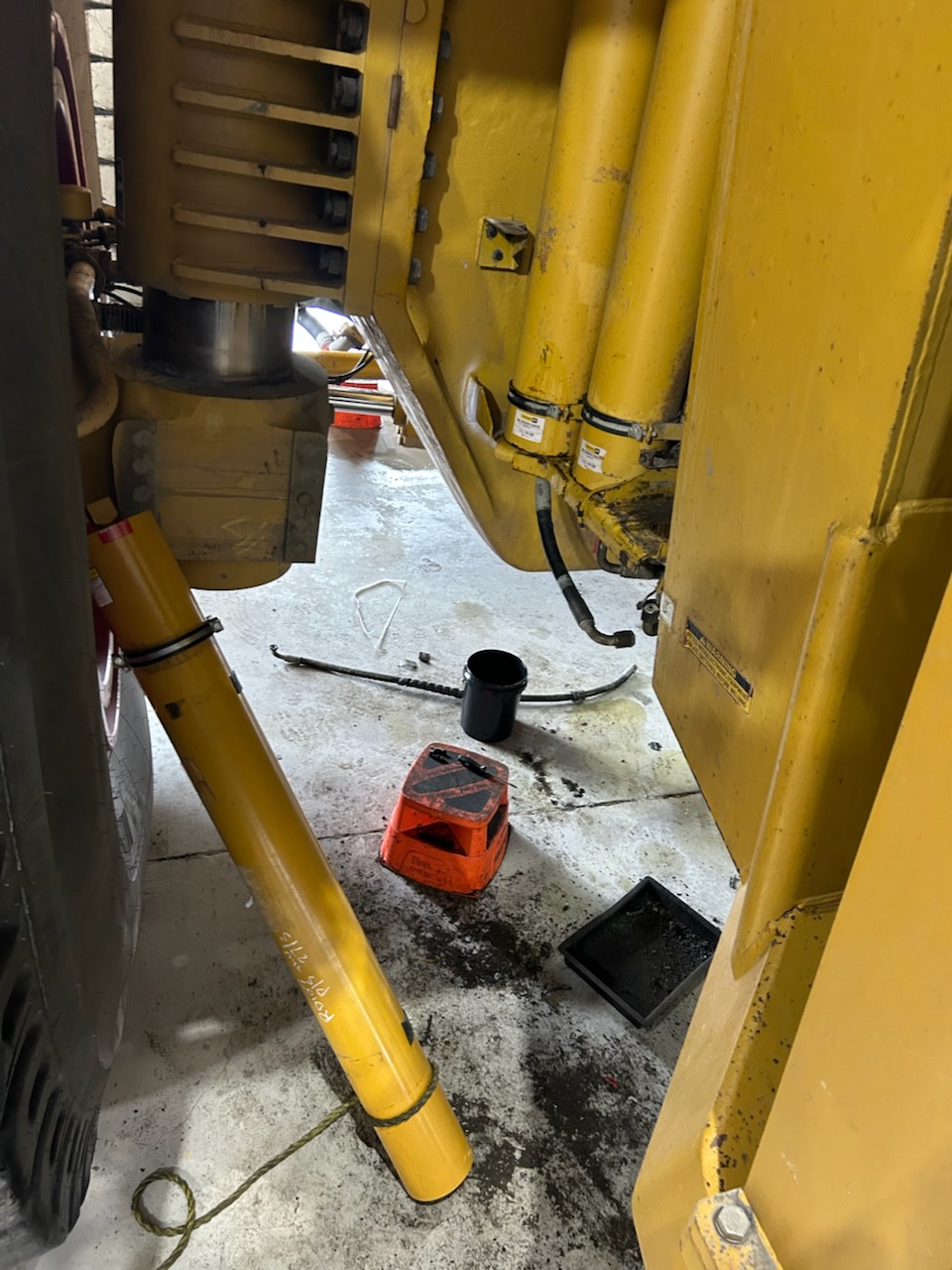
- Figure 3: During the installation of a 300kg steering accumulator, the lifting sling jammed in the body of the truck. The sling has failed, and the load fell 1.6m. Workers were 1.5m from the falling accumulator. There was no hard barrier delineating the drop zone.

- Figure 4: A dragline fan motor weighing roughly 300kg - 500kg has fallen around 6-8m from warehouse pallet racking and contacted a forklift and landed near another worker.
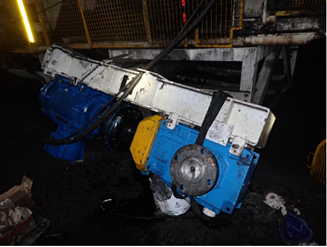
- Figure 5: While commissioning a conveyor, the drive was removed due to a mechanical fault. During the lift process, the workers decided to use a higher rated chain block. When changing the chain block, the assembly the remaining coupling bolt failed, and the assembly has fallen and rolled onto the ground.

- Figure 6: A conveyor idler has fallen from an overhead gantry conveyor and into the travel way under the conveyor.
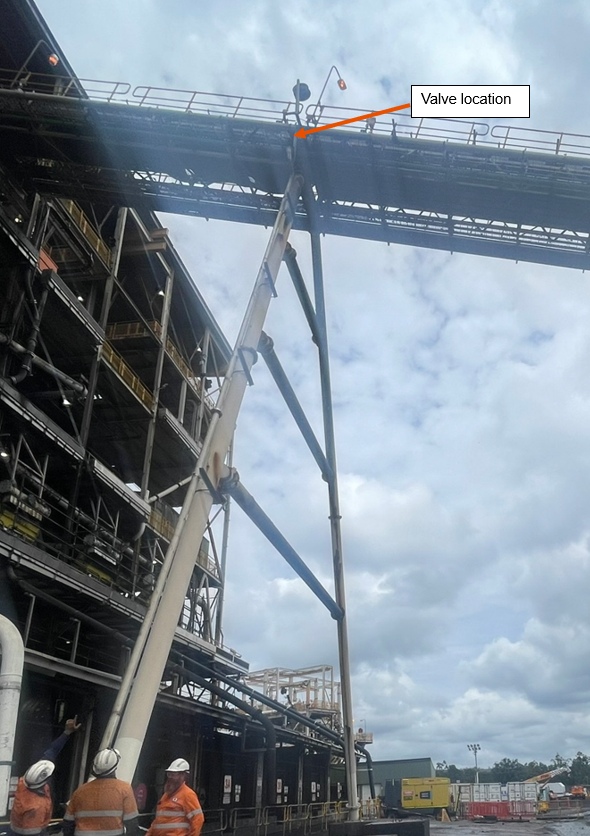
- Figure 7: When testing of the deluge system, a two-piece valve has failed, and the top piece of the valve has fallen 25m into a restricted barricaded zone.
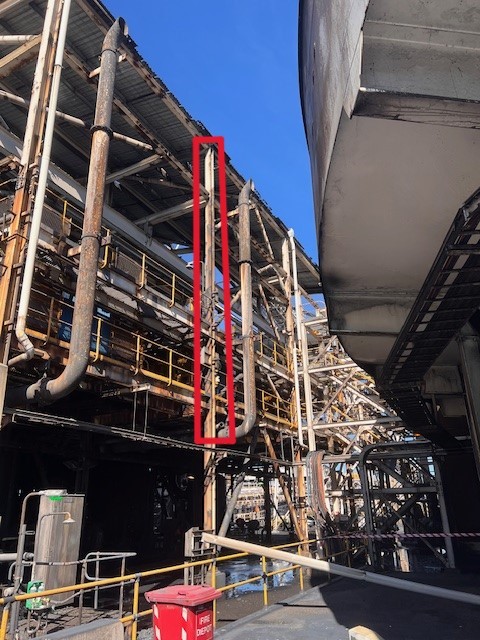
- Figure 8: A 10kg PVC drainpipe and 3kg metal catch box has fallen approximately 10-15m from the side of a coal handling and preparation plant.
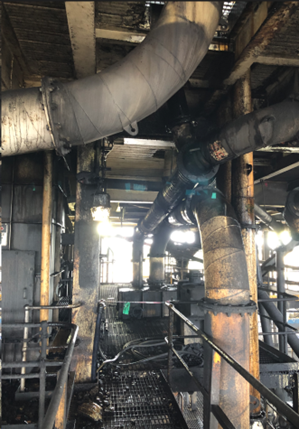
- Figure 9: A worker noticed that an 8kg section of spalling concrete from the floor above had fallen 4.1m onto a lower walkway in an incident which occurred at a mine site.
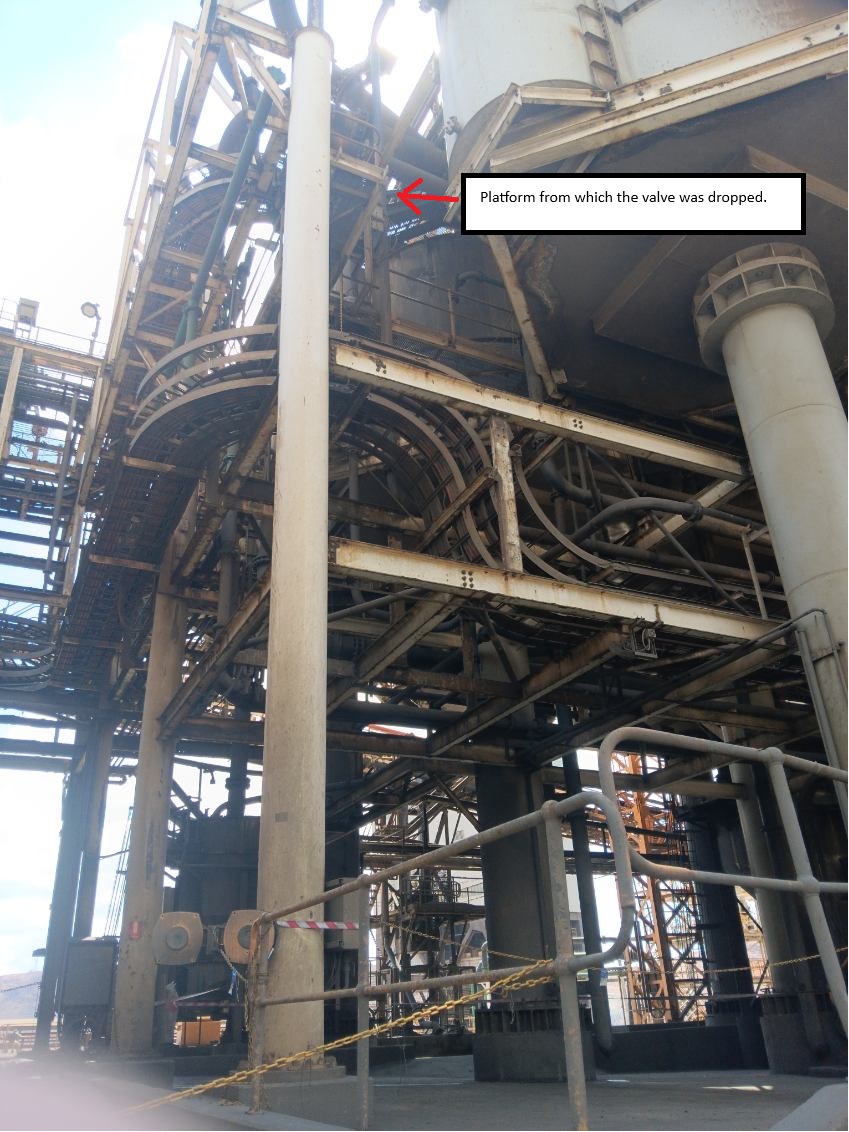
- Figure 10: During the replacement of a butterfly valve, it has fallen 10m to the ground. A limited drop zone had been established but adjacent pedestrian areas were not included.

- Figure 11: A 15kg conveyor tracking idler frame with idlers has failed and fallen 14.5m to a platform damaging a handrail and floor plate.

- Figure 12: A 12m drill steel dislodged from carousel and fell to ground. The steel came to rest with one end on the deck's handrail and the other on the drill pattern (ground).
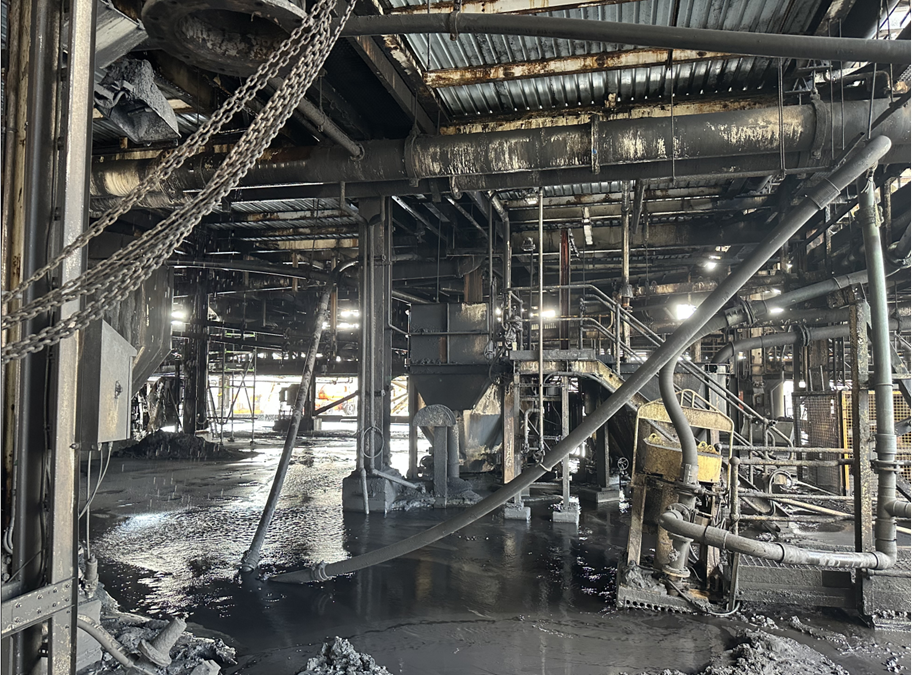
- Figure 13: During an inspection of a coal handling and preparation plant, a worker found that approximately 20m of 100mm of pipe had fallen as the supports had failed.
RSHQ issues Safety and Health Alerts to highlight serious incidents, raise awareness of risks and prompt assessment of existing controls.
Investigations are ongoing. Information within this Safety and Health Alert is accurate at the time of publishing and further detail may be released as investigations progress.
Contact: communications@rshq.qld.gov.au
Issued by Resources Safety & Health Queensland
Placement: Place this announcement on noticeboards and ensure all relevant people in your organisation receive a copy.
Find more Safety and Health Alerts