
Alert no. 126 | 29 July 2026 | Version 126
Severe hand injuries amongst drilling and well servicing workers
What happened?
Warning: The following Safety Alert contains graphic images of hand injuries
- Drilling and well servicing workers in Queensland’s petroleum and gas industry are sustaining serious hand injuries during routine operational tasks.
- Resources Safety and Health Queensland (RSHQ) has seen an increase in the severity of reported hand injuries. All reported injuries have involved deep tissue trauma, compound fractures, or partial amputations and have needed immediate surgical treatment.
- Hand injuries are a regulatory priority in 2026-27 and RSHQ is calling on industry to focus on this issue and review the learnings outlined below to reduce both the frequency and severity of preventable hand injuries.
How did it happen?
- Serious hand injuries are preventable, however Queensland is seeing an increase in the severity of hand injuries among drilling and well servicing workers.
- On average one serious hand injury is occurring around every 1.5 months.
- The incidents have involved recurring exposure to:
- pinch points
- line-of-fire positions
- stored energy
- heavy or unstable equipment
- use of hands to hold, guide or position equipment.
- Incident reviews have identified a repeated reliance on PPE, including gloves, as the main control.
- PPE may reduce injury severity, but it does not remove crush, entrapment, amputation or stored-energy hazards.
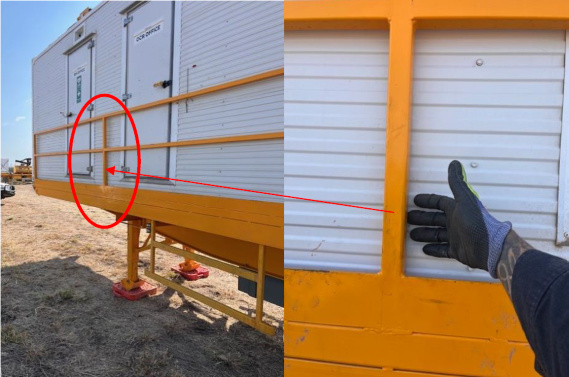
Figure 1: A re-enactment of an incident where a worker’s finger was crushed during the stowage of a walkway on a mobile office for transport, causing a severe laceration. The location of the crush point is pictured on the left and the position of the worker's hand at the crush point is pictured on the right.
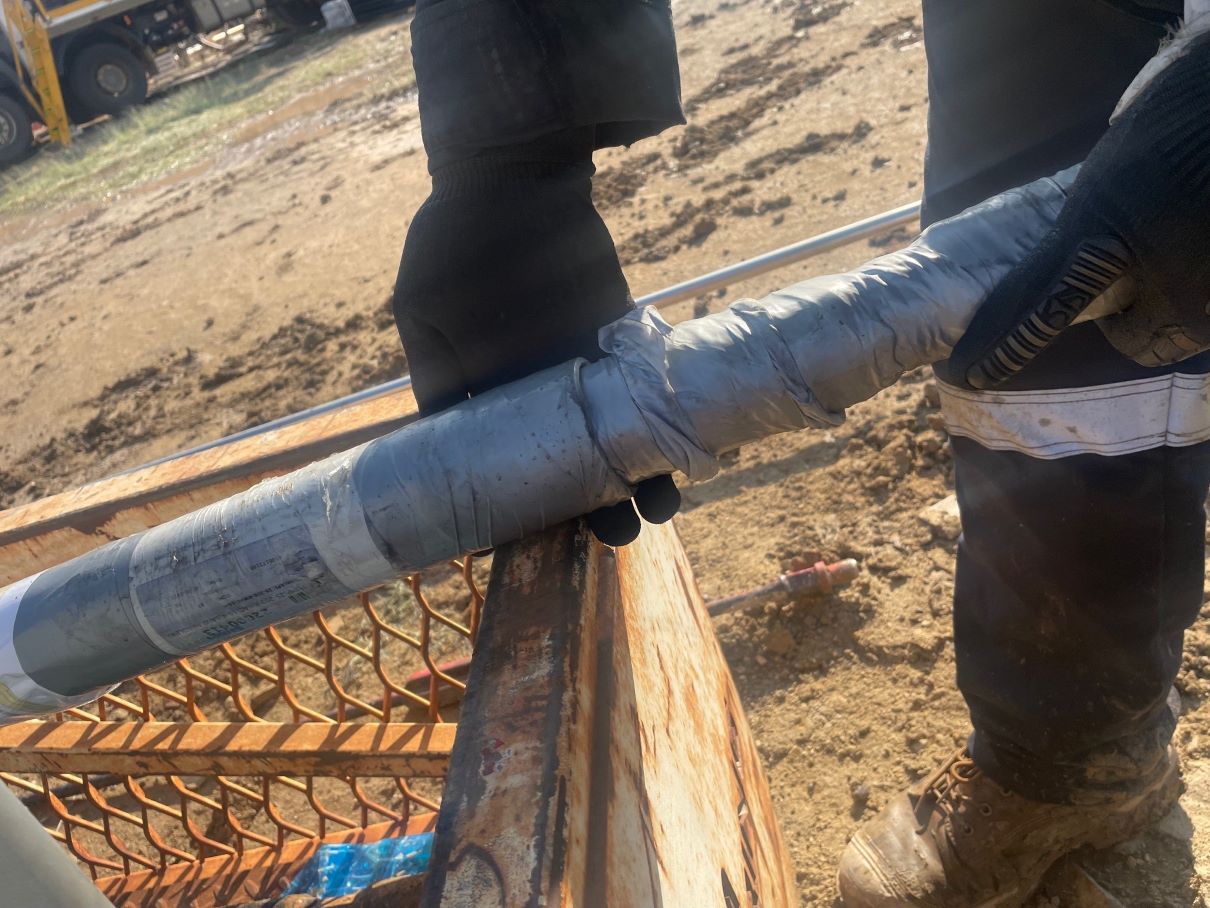
Figure 2: A re-enactment of a severe crush and laceration injury showing the position of the worker's hand beneath a section of downhole equipment at the crush point. The injury occurred during the stowage of downhole equipment into a transport basket.
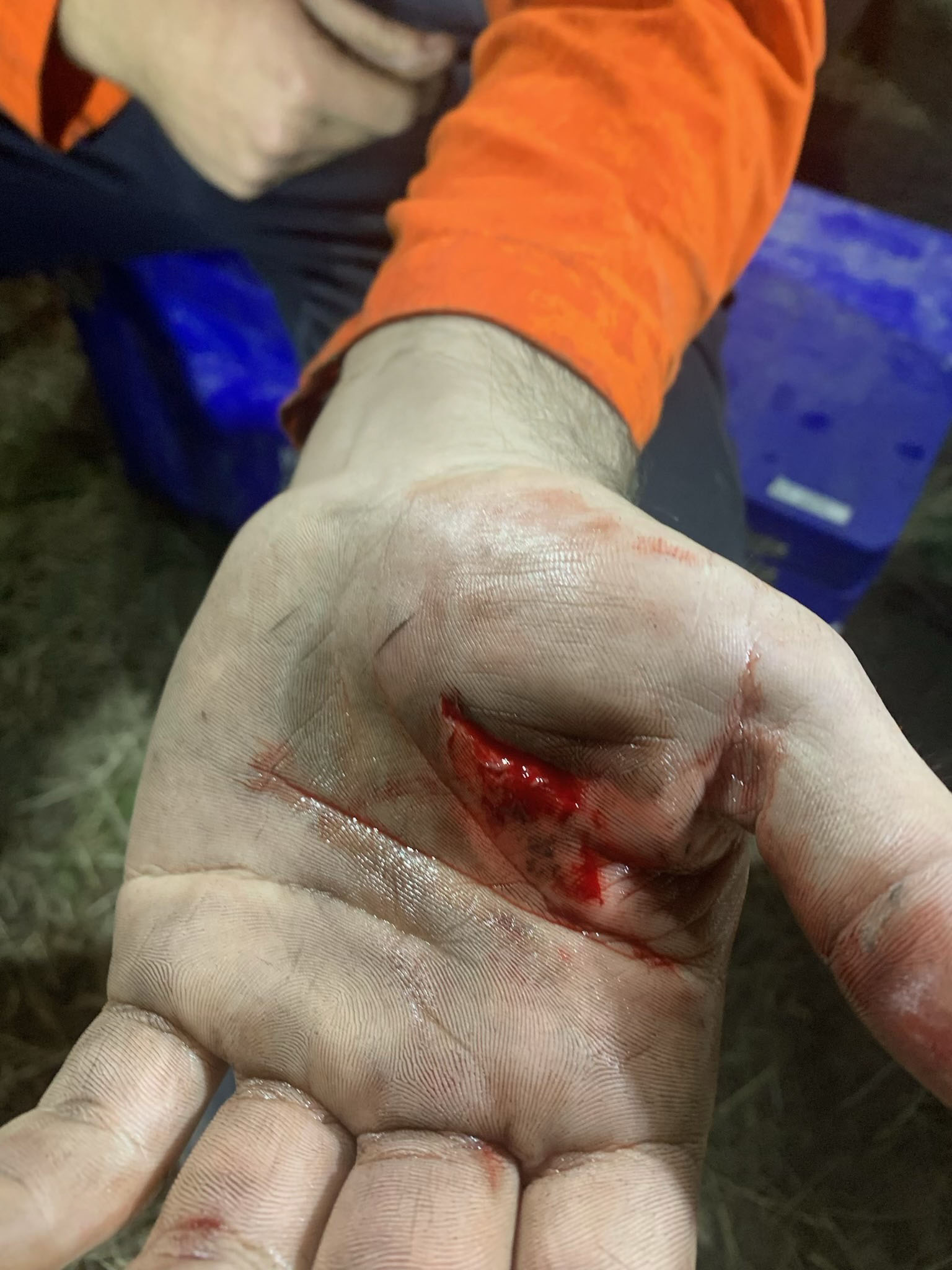 Figure 3: A worker sustained a severe laceration to the palm after removing a camlock fitting that was pressurised. The cut through the worker's glove is pictured on the left, while the resulting hand injury, which required surgical treatment, is pictured on the right.
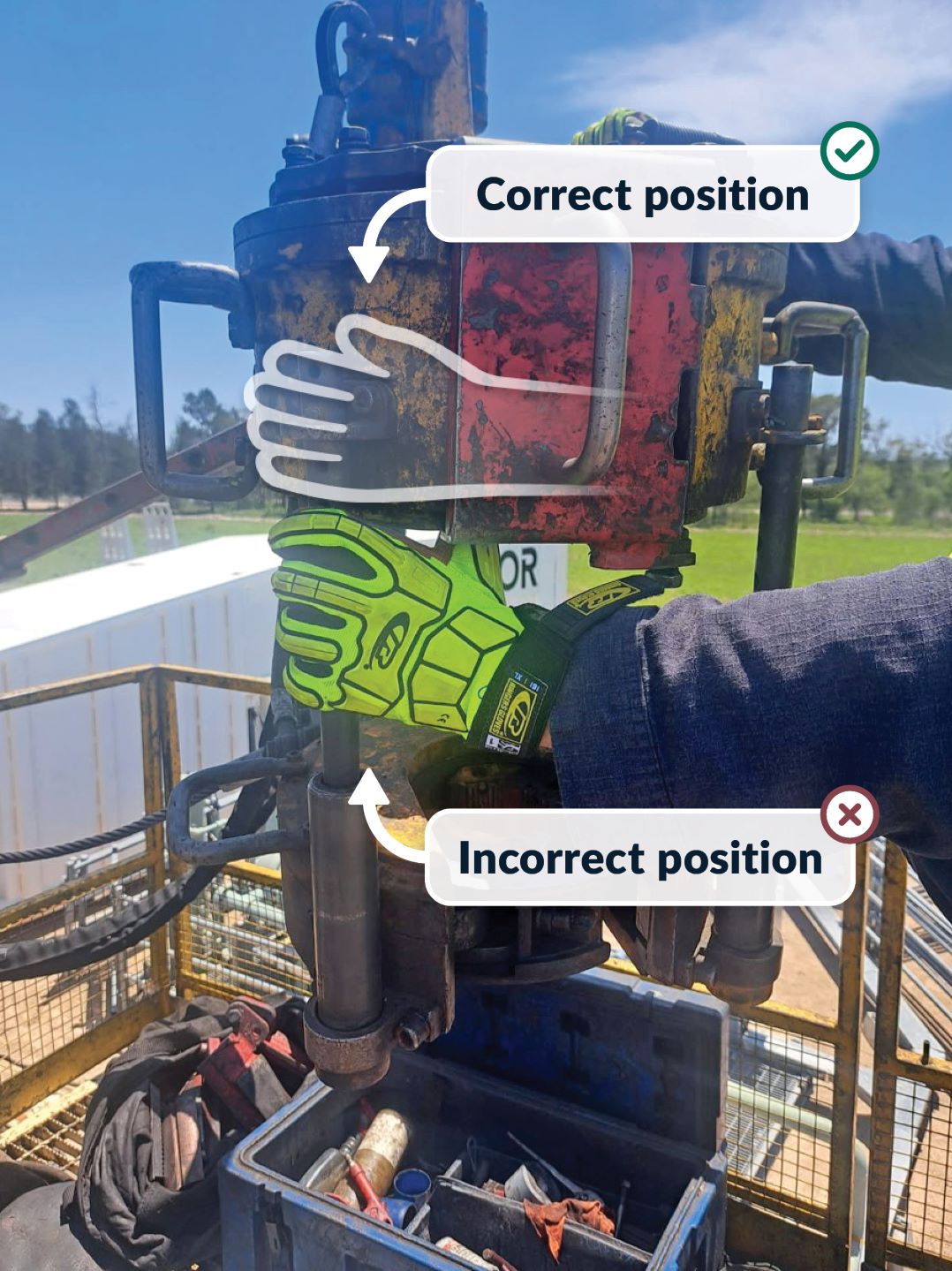
Figure 4: A re-enactment of a thumb amputation. While troubleshooting engagement of the tubing tong dies with the tubing, a worker placed their hand inside the working area of the dies. Activation of the tong drew the worker's thumb into the dies, resulting in amputation.
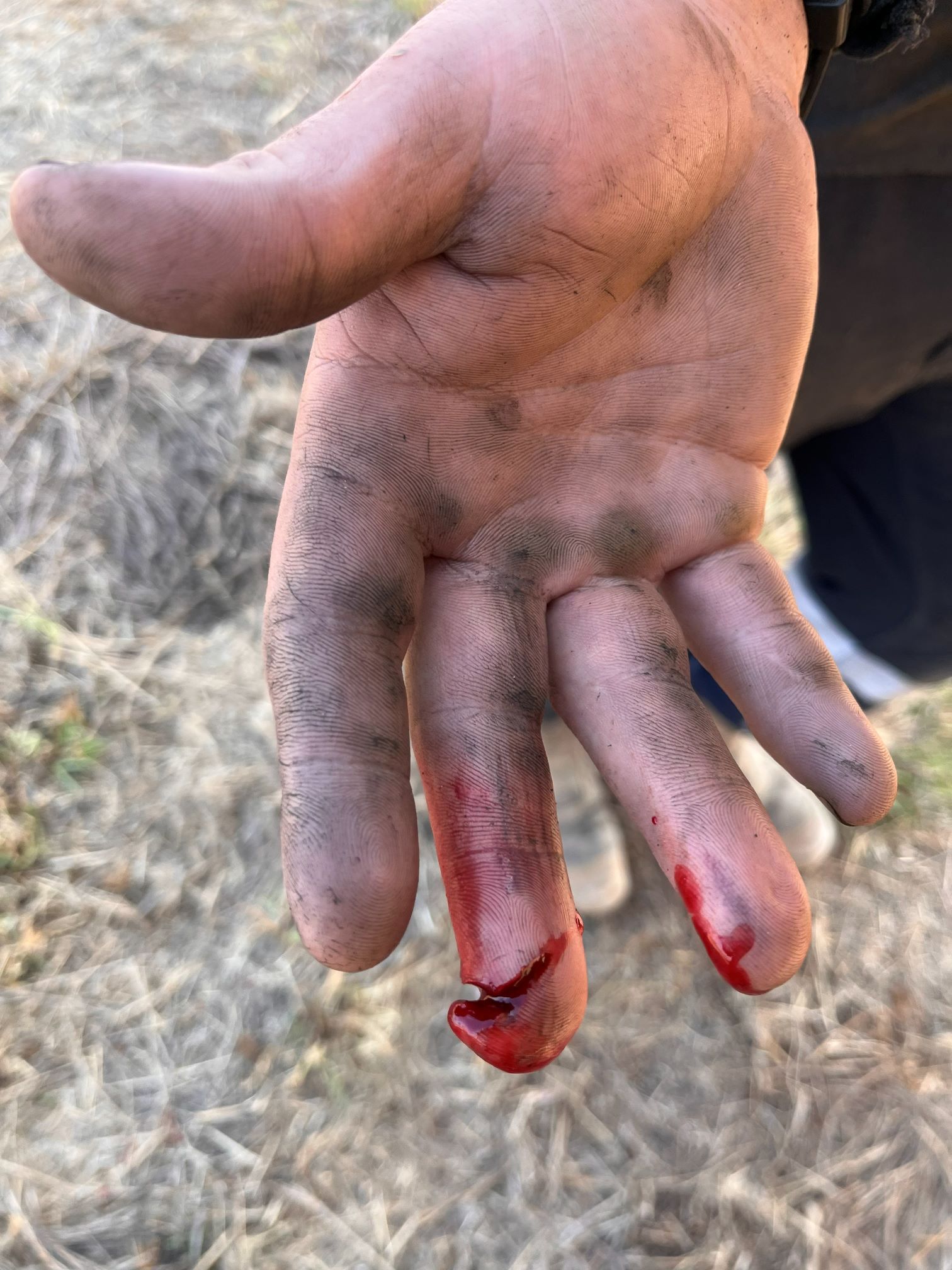 Figure 5: An example of a serious hand injury. A worker sustained a crush injury that caused a deep finger laceration which needed surgical treatment.
Recommendations
- Operators, Executive Safety Managers and Site Safety Managers must immediately take action to ensure associated risks are appropriately mitigated. This includes reviewing the following specific sections of their Safety Management System (SMS):
1. Elimination and engineering (hierarchy of controls):
- Prioritise higher-order controls: The primary objective of task planning must be the total elimination of manual handling. Work procedures must mandate the use of mechanical handling aids, remote handling tools, and physical barriers to isolate workers from the line of fire.
- Review Formal Safety Assessments (FSAs): Review FSAs for all pipe handling, tripping, and rig-up/rig-down activities to explicitly identify potential pinch points, crush zones, and stored energy hazards.
2. Procedural controls and Management of Change (MoC):
- Task-specific procedures: Standard Operating Procedures (SOPs) must clearly define safe hand-placement zones and non-placement zones. Generic risk assessments are insufficient.
- Management of Change (MoC) processes: Any modification to handling equipment, hand holding locations, tool configurations, or handling protocols must trigger a formal MoC process to ensure new line-of-fire hazards are not inadvertently introduced.
3. Personal Protective Equipment (PPE) limitations:
- Limitations: PPE does not prevent crush injuries or amputations caused by heavy mechanical rig equipment. Impact-resistant gloves are a final, lower-order line of defence against minor abrasions and incidental bumps.
- Task-based selection: PPE matrices must define glove selection strictly based on the specific task (e.g. specialised high-impact/cut-resistant gloves for specific mechanical tasks vs. chemical-resistant gloves for fluid handling), while explicitly communicating the mechanical limitations of the gear to the workforce.
References and further information
- Petroleum and Gas (Production and Safety) Act 2004
- Petroleum and Gas (Safety) Regulation 2018
- Safety Alert #216 - Serious finger accidents at Queensland coal mines
- Safety Alert #61 – Automated machinery systems on drill rigs
- AS/NZS 2161.1 – Occupational Protective Gloves, Part 1: Selection, Use and Maintenance
- AS/NZS 2161.3 – Occupational Protective Gloves, Part 3: Protection Against Mechanical Risks
- Managing the risks of plant in the workplace code of practice 2021
- How to Manage Work Health and Safety Risks Code of Practice 2021
- Preventing eye and hand injuries
Contact: gasSafe@rshq.qld.gov.au
Issued by Resources Safety & Health Queensland
Placement: Place this announcement on noticeboards and ensure all relevant people in your organisation receive a copy.
Find more safety notices
Search the hazards database