

Coal Inspectorate | Alert | No.486 V 1 | 27 November 2026
Failure of compressed air breathing apparatus quick-fill couplings which may prevent replenishment of breathing air during an emergency
Summary
- During the recent Level 1 emergency response exercise at an underground coal mine, an issue was identified with refill-related connection failures of compressed air breathing apparatus (CABA) which may prevent replenishment of breathing air during an emergency response or self-escape event.
- Some CABA units were unable to connect to quick-fill pods due to a suspected fault in the Danfoss FD17 male quick-disconnect couplings.
- The internal mine investigation remains ongoing in consultation with the original equipment manufacturer (OEM).
- Whilst this information remains subject to confirmation by the OEM and should not be considered definitive, the potential for serious risk to life warrants underground mines taking recommended actions outlined in this Safety and Health Alert.
Issue explained
During a Level 1 emergency response exercise at an underground coal mine, 10 coal mine workers undertook a simulated self-escape using CABA. Three of the CABA units reportedly experienced refill-related connection failures after refilling at multiple locations.
Failure of refill connections may prevent replenishment of breathing air during an emergency response or self-escape event. Inability to replenish breathing air may compromise emergency self-escape capability and expose workers to serious injury or fatality.
An internal incident investigation was immediately initiated in consultation with the OEM. During recommissioning of the remaining 7 units, a further 3 units were unable to connect to a quick-fill pod.
The mine investigation identified Danfoss FD17 male quick-disconnect couplings – part number FD17‑1082‑10‑04 with a reported manufacturing date range of 3 May 2023 to 22 August 2024 – as a potential common factor among the affected units.
Preliminary findings suggest an internal O-ring may become displaced under pressure, preventing effective connection to the quick-fill fitting (Figures 1 and 2). The failure mechanism and any contributing factors remain under investigation.
It is important to note that, at this stage, this information remains subject to confirmation by the OEM and should not be considered definitive.
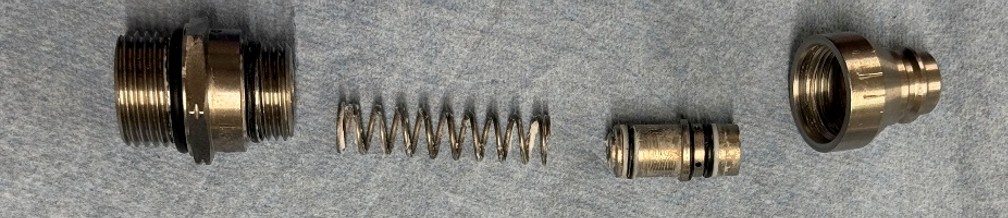 Figure 1. Disassembled functional Danfoss fitting.
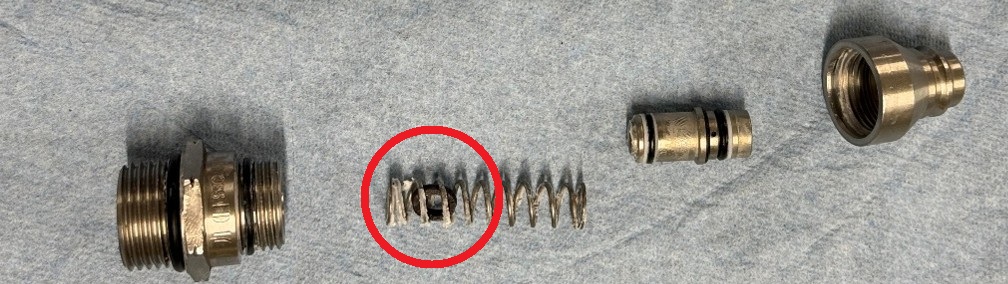
Figure 2. Disassembled non-functional Danfoss fitting with O-ring visible within the spring.
Learnings
Inspect affected equipment
- Identify CABA units fitted with Danfoss FD17 male couplings, particularly part number FD17‑1082‑10‑04.
- Contact the OEM to determine the potentially affected population, applicable production periods, interim controls and corrective actions.
- Verify refill capability using OEM-specified inspection and testing procedures.
- Remove affected, failed or suspect units from operational service pending OEM assessment and verification of serviceability.
- Ensure enough serviceable CABA units are maintained to support emergency response and self-escape arrangements.
- Consult the OEM before undertaking coupling replacement, modification or component substitution.
Test refill capacity
- Verify compatibility, approval status and successful functional testing before returning equipment to service.
- Verify connection integrity and refill capability under representative operating conditions – including during recommissioning following exercises, training activities or operational use – and record, investigate and address any abnormalities identified.
- Inspect couplings for damage, contamination, leakage, probe alignment, and the condition of sealing and protective caps. Follow manufacturer instructions for inspection, connection, disconnection, maintenance and storage.
- For FD17 couplings that are not routinely used, follow Danfoss guidance to periodically connect and disconnect mating components to verify continued functionality.
Review maintenance and inspection programs
- Verify maintenance procedures include inspection of coupling internals, sealing components and connection performance.
- Review whether degradation mechanisms such as seal hardening, compression set, wear, contamination, ageing or lubricant incompatibility could contribute to failure.
- Verify operational functionality, not solely visual condition – inspection programs should include practical connection and refill testing at representative operating pressures as visual examination alone may not detect internal seal displacement, dimensional non-conformance, or other latent coupling defects.
RSHQ issues Safety and Health Alerts to highlight serious incidents, raise awareness of risks and prompt assessment of existing controls.
Investigations are ongoing. Information within this Safety and Health Alert is accurate at the time of publishing and further detail may be released as investigations progress.
References and further information
- Danfoss Power Solutions, FD17 Series Quick Disconnect Coupling Operator's Manual, BC512745612591en-000101 (Connection, Disconnection and Maintenance).
- Refer to the applicable CABA OEM instructions for inspection, testing, maintenance and recommissioning requirements.
Contact: QldMinesInspectorate@rshq.qld.gov.au
Issued by Resources Safety & Health Queensland
Placement: Place this announcement on noticeboards and ensure all relevant people in your organisation receive a copy.
Find more Safety and Health Alerts